

- We have submitted a major patent for filtering, reducing, and reproducing voice and other time series data, with many cell phone and remote sensor applications.
- Industry leader John Major has joined our Advisory Board.
- As invited Technology Fair participants in the Global Smart Services Leadership Summit, sponsored by Qualcomm, we gave a well received demonstration of Brainlike wireless data reduction value,.
- We have recently begun a series of reports on measuring smart sensing value. The first report is entitled, "Measuring Smart Sensor Value: a human health monitoring example." Please check it out.
- We have recently completed a white paper describing smart sensor engineering, based on Brainlike technology. more
- Brainlike's enabling technology patent entitled, "Efficient Processing for an Auto-Adaptive Network," has recently been issued as U.S. Patent No. 7,529,721. The patent covers Brainlike Sensing applications that will reside on cell phones, radios, and remote sensor transmitters, upstream of telemetry. Several other Brainlike patents are pending in the U.S. and other countries.
- Brainlike sensing has been identified as key enabling technology for the Wireless Internet Revolution. more
- Brainlike's smart sensing short course will equip engineers and analysts to develop, deliver, and use smart sensing technology for making better decisions from real-time data. more
- Brainlike's smart sensing analysis team has recently completed a case study, based on accelerometer data. The case study shows that, "sensor system engineers should consider using smart sensing modules and analysis tools, in order to develop and deploy more robust sensing systems, more quickly, and at lower cost." more
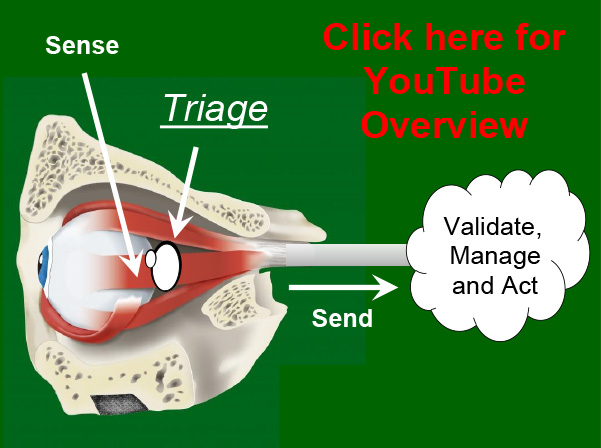
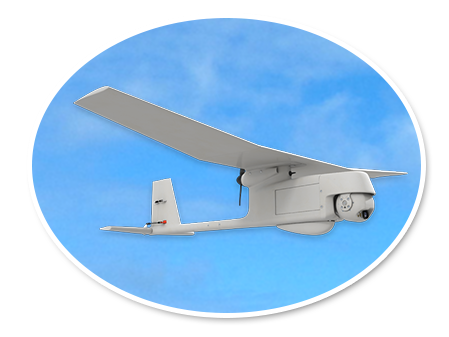
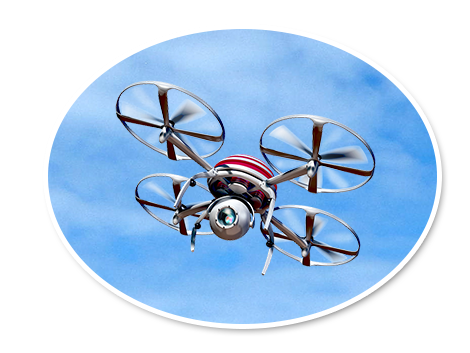
- Brainlike analysts have recently completed a white paper and technical report, describing how Brainlike sensing can reduce video camera data to useful information, upstream of telemetry.
- Brainlike analysts co-authored papers presented at the March, 2009 Joint Undersea Warfare Technology Conference in San Diego, entitled "Recent Smart Sensing Developments: Undersea Warfare Surveillance Prospects," and "Smart Sensing Analysis using Advanced Process Build Methods: A Case Study based on IEER data."
- In June, 2008, we gave an invited presentation at the 2008 Navy Opportunity Forum, in keeping with its "delivering technology to the fleet" theme.
- In June, 2008, we won a Phase II contract for "Auto-Adaptive Whale Detection," through the Naval Air Systems Command (NAVAIR) Scientific Business Innovation Research (SBIR) program. Details are provided below.
- In June, 2008, we gave a clutter reduction workshop, based on the Brainlike Studio™ analytics tool kit, at the Office of Naval Research.
- In May, 2008, we gave our inaugural workshop on the Brainlike Studio™ analytics tool kit. Soon, we will be offering the workshop throughout the United States.
- In March, 2008, we sold a license for the Brainlike Studio™ analytics tool kit, along with training and analysis services, to the office of Naval Research. The product and services will be used for clutter map analysis of sensor data from unmanned vehicles.
- In February, 2008, we sold a license for the Brainlike Studio™ analytics tool kit to the office of Naval Research. The product will be used to analyze electro-optic surveillance data from unmanned aerial vehicles.
- In December, 2007, we won a Phase I option contract for "Auto-Adaptive Whale Detection" through the Naval Air Systems Command (NAVAIR) Scientific Business Innovation Research (SBIR) program. Details are provided below.
- In November, 2007, we won a Phase II option contract for "Clutter Removal and Substantially Improved Submarine Detection, through Affordable 'Brainlike' Methods," through the Naval Air Systems Command (NAVAIR) Scientific Technology Transfer (STTR) program. Details are provided below.
- In October, 2007, we won a Phase II option contract for "Clutter Removal and Substantially Improved Submarine Detection, through Affordable 'Brainlike' Methods," through the Naval Air Systems Command (NAVAIR) Scientific Technology Transfer (STTR) program. Details are provided below.
- In April, 2007, we won a Phase I contract for "Auto-Adaptive Whale Detection" through the Naval Air Systems Command (NAVAIR) Scientific Business Innovation Research (SBIR) program. The objective of the SBIR topic is to develop innovative technologies to search anti-submarine warfare (ASW) test ranges for the presence of whales. This contract will deliver such methods in the form of a process that is being refined by Brainlike Surveillance, Inc. Results will prove the feasibility of a special-purpose system, based on the Brainlike process, for improving the effectiveness of whale search radar (WSR). Brainlike will develop a prototype for a special-purpose system, based on the Brainlike process, and evaluate its clutter removal potential. The system will be developed by analyzing radar data containing heavy-tailed noise, extracting features within the Brainlike process framework, and evaluating the potential for Brainlike added value in terms of clutter and processing time reduction. As part of the effort, the prototype will be delivered to the Navy in the form of a demonstration, simulation, and research tool. Doing so will allow the Navy to research and evaluate its potential for a variety of other remote sensing applications. Brainlike subcontractors for the effort include DRS Technologies.
- In December, 2006, we won a Phase II contract for "Clutter Removal and Substantially Improved Submarine Detection, through Affordable 'Brainlike' Methods," through the Naval Air Systems Command (NAVAIR) Scientific Technology Transfer (STTR) program. The contract offers a system for improving decisive inferences based on Air Deployable Active Receive (ADAR) sonar, in a form that is suitable for deployment on ADAR sonobuoys. Anticipated near-term improvements include better target recognition and reduced operator fatigue, brought about through improved ping data filtering on ADAR aircraft. Anticipated long-term improvements include increased sonobuoy persistence and decreased telemetry cost, delivered through sonobuoy-based target detection and telemetry control. The effort is supported by the NAVAIR antisubmarine systems program (PMA-264). Brainlike subcontractors for the effort include the Johns Hopkins University Applied Physics Laboratory and theUnderSea Sensor Systems Group.
- In April, 2006, Bob Jannarone and Tyler Tatum from Brainlike, along with Michael Traweek from the Office of Naval Research, and Thomas Wettergren from the Naval Undersea Warfare Center, completed a paper entitled "Damn the Torpedoes or Let’s Wait and See? Decisive Inference for Making the Right Choice" The paper is being reviewed for publication by a major journal.
- In September, 2005, we won a contract for "Auto-adaptive Signal Processing Systems for Magnetic Sensors," through the Office of Naval Research Scientific Technology Transfer (STTR) program. This effort will develop a novel signal processing technique for detecting submarines, mines and other targets from magnetic sensor data, based on a concurrent learning process that has been developed by Brainlike Surveillance, Inc. The solution produced significant improvements in the reduction of background clutter, huge reductions in system implementation cost, and significant increases in the ability to detect known and currently unknown targets.
- In August, 2005, we won a contract for "Novel Data Fusion from Maritime Sensing through Automated Learning," from the Office of Naval Research Long Range Navy and Marine Corps Science and Technology Program. This effort will add to a large body of existing results, showing that the Brainlike process adds significant value for detecting unforeseen anomalies under changing conditions. Results will evaluate the extent to which Brainlike processes add value when targets can be identified from training data prior to field deployment. Of special importance, results will indicate the extent to which Brainlike processes can add value in key operational applications for mine warfare.
- In July, 2005, we proudly announced Tyler Tatum as our Chief Executive Officer. After successfully working with our founder, Bob Jannarone during the 1990s to establish their first venture funded company, Tyler ran Project Planet, an environmental hotel services company that grew dramatically under his leadership. We trust that Tyler will lead us to delivering huge monitoring value to our Nation’s defense and homeland security effort . . .more
- In June, 2005 our President was honored as AFCEAN of the Month for successfully organizing the 2005 C4ISR Symposium, co-sponsored by the Spawar Systems Center, San Diego, and the San Diego Chapter of the Armed Forces Communications and Electronics Association.
- Please check out our paper, entitled "A Novel Process for Littoral Target Recognition: Preliminary Analysis Results." This paper was published in the Proceedings of the Oceans 2005 Conference.
- Please check out our paper, entitled "Net-Centric Surveillance Improvement Potential."
- Please check out our paper, entitled "New Brainlike Surveillance Software for Identifying Deviant and High Impact Data."
- Please check out "Automated Learning for Effective Surveillance: A Strategic Imperative for National Security."
- In June, 2004, our President briefed the Naval Undersea Warfare Center Data Fusion Work Group on "Brainlike Auto-Adaptive Technology for Undersea Surveillance."
- In February, 2004, we presented a free course on network-centric surveillance at AFCEA West. The course is currently being expanded to a full course. If you would like to influence the content of the expanded course, please fill out the course survey.
- In January, 2004, our abstract entitled, "Analytical Innovations To Accelerate Active Living Research Results" was published in the proceedings of Active Living Research Conference.
|
|